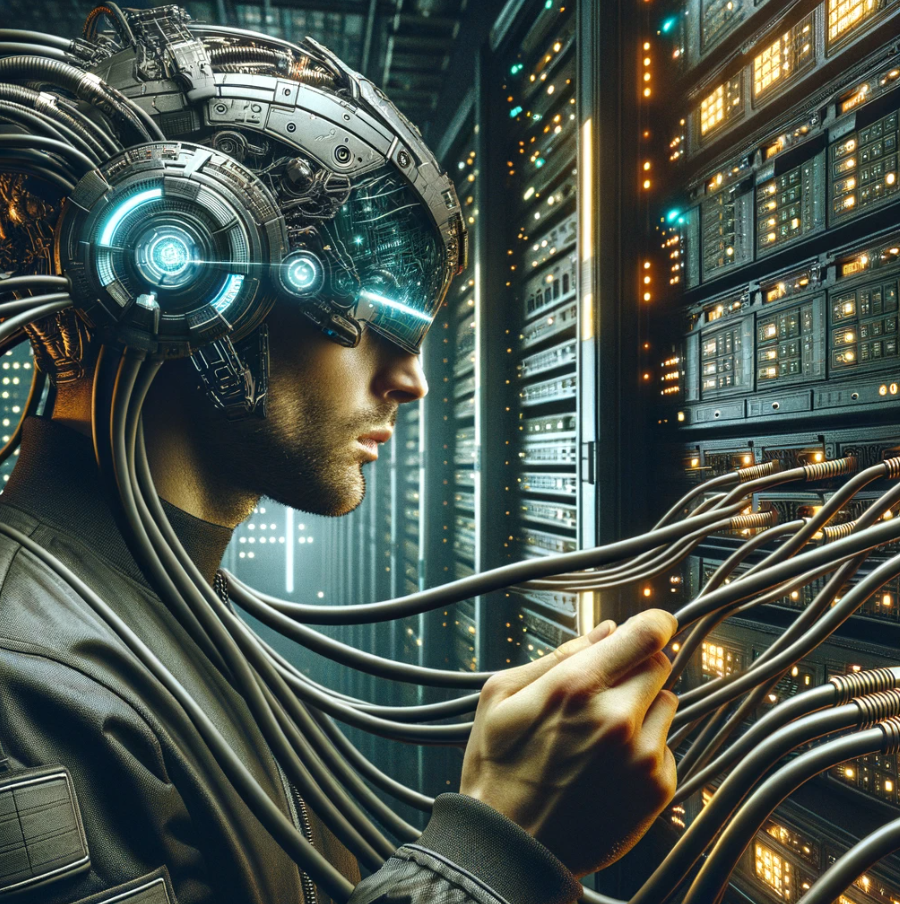

In the not-too-distant future, humanity has developed a revolutionary technology: the neurosynaptic cloning helmet. This advanced device is capable of scanning and replicating the synaptic connections of the human brain, capturing every thought, memory, and emotion.
When a person puts on the helmet, millions of nanocircuits analyze the electrical and chemical activity of neurons in real-time. The data obtained are so precise that they allow for the digital recreation of individual consciousness.
All this cerebral information is stored in gigantic servers located in underground data centers. These servers, protected by state-of-the-art security systems, contain digital copies of thousands of human minds.
The purpose of this technology is to preserve human knowledge and experience for future generations. Some dream of the possibility of interacting with these digital consciousnesses, consulting them, or even integrating them into artificial intelligence systems.
However, this advancement also raises ethical dilemmas about identity, privacy, and the meaning of consciousness. Is a digital copy really the same person? What rights would a consciousness stored on a server have?
As society adapts to this new reality, the neurosynaptic cloning helmet becomes the center of intense debates and reflections on the future of humanity and technology.

